KITESURFING FAQs

A well-developed training program, state-of-the-art equipment, the many years of teaching experience of VDWS- and VÖWS-licensed kite instructors, and the excellent training conditions on Lake Neusiedl ensure success for learners at every skill level!

Which kitesurfing course should I sign up for?

Our courses are designed as a modular system. Each course builds on the previous one, soit doesn’t matter which course you take—the main thing is to get started! We’ve structured our offerings so that the more courses you book at once, the cheaper each course becomes for you. This system is meant to give you a sense of the minimum duration and associated costs of your kitesurfing training. After all, to ultimately call yourself a safe kitesurfer, you simply need practice and experience. Don’t worry!! You don’t have to expect hundreds of lessons with instructors right away. Thanks to the conditions at Lake Neusiedl and the resources and programs offered by our kite school, you can start gaining hands-on experience much sooner than in other kiting spots. So keep in mind: Renting equipment is essential for your journey toward kiting on your own! Learn more at: When can I rent a kite on my own? 

But let's get back to the original question. For beginners with no prior kitesurfing experience, we recommend our beginner course packages. The size of the package is then selected based on your approach to the sport:

“I just want to see if this sport is right for me!” – Basic Course
“I want to learn all the basics and maybe continue abroad (or at the lake)!” – Large Course
“I want to learn and master this sport to the point where I can practice on my own!” – XL Course (+ possibly additional modules)

So, as a beginner, you’ll get the best overall value if you book the Basic Course XL right away. The included equipment rental hours are factored in at no extra cost and are only available with the Basic Course XL. It’s not possible to upgrade from a smaller course package to a larger one by paying the difference (exception: introductory course).  However, you can add modules to your course at any time, such as water training, one-on-one private lessons, or equipment rentals.

If you already have some experience and just want to pick up where you left off, we recommend either water training sessions for beginners and those looking to advance, or one-on-one private lessons.

Water training for beginners and intermediate riders: 2 students share 1 kite + 1 instructor for a total of 3 hours
1-on-1 private lessons: 1 student and 1 instructor for a total of 3 hours

Please note the discount when booking individual modules per person (water training and private lessons):

2 units: 5%
3 units: 10%
4 or more units: 15%

What does a kitesurfing course involve?

Of course, that depends entirely on the skill level for which the course is designed. A basic course for beginners consists of at least 4 modules (Basic Course), with each module lasting about 3 hours:

Module 1: The
Kite School – On-land training with practice kites to learn how to control a kite (introductory course)
– Setting up a kite for use on the water + advanced safety training

 Module 2: Water Training 1 
– The Safety System in Practice
– Body Dragging (letting yourself be pulled through the water—the ultimate fun!)
– Relaunch (restarting a kite after a crash)
– Self-Rescue (advanced safety training)

Module 3: Water Training 2
– Bodydrag with the board
– Board start
– Gliding short distances + stopping safely

Module 4: Theory
– Advanced safety training
Equipment knowledge
– Meteorology
andmuch more
Opportunity to obtain an international kite license (required to rent equipment at kite schools)

If you sign up for a beginner or intermediate course, there will be an initial consultation with your coach before each session. During this consultation, your current level of knowledge and skill will be assessed. If you plan to become independent as quickly as possible and spend time on the water with rental equipment without supervision, we’ll show you everything you need to know so you can practice safely and successfully on your own. You can find the requirements for this under: When can I rent a kite on my own?
However, as long as there are still too many uncertainties regarding certain topics, you should book additional lessons on the water. How your advanced course ultimately unfolds depends entirely on your progress during the basic training. 

On-land training for beginners:
Depending on the group size and wind direction, on-land training takes place either right at our kitesurfing spot or on our practice field on the outskirts of Podersdorf. The practice field is about a 5-minute drive from our kite center. Step by step, and with plenty of space, you’ll be safely prepared to handle larger kites.

Water Training:

Whether you’re taking your first water training session or are already practicing with your board, you’ll start by preparing and setting up your equipment together with your instructor. Once your learning goals have been set, your equipment will be checked one more time. Then, depending on the wind direction, we’ll either take a boat up to 3 km into the middle of the lake against the wind, or we’ll start right at the water’s edge and have someone pick us up afterward. In a 2:1 lesson (water training for beginners and intermediate riders), you’ll take turns with another student every 15–20 minutes. In a 1:1 lesson (private lesson), you’ll naturally have twice as much time on the kite as you would in a water training session for beginners and intermediate riders. 

Theory:

Three hours of theory might sound like a pretty tedious undertaking at first. But they’ll fly by! This session is just one of many theoretical lessons you’ll receive throughout your kiting career. The instructor will explain everything you need to know so you can ride safely at other kiting spots around the globe. We’ll cover the weather and the equipment, and we’ll also give you the opportunity to obtain an international kite license for rental purposes. 

How does course planning work?

Of course, kites won’t fly without wind. However, especially for beginners, there are many aspects of the sport that require very little wind. That’s why beginner courses start with a 99% probability of taking place, almost regardless of wind and weather conditions. The schedule for your kiteboarding course (regardless of the type) is always set one day in advance. Long-term wind forecasts are very inaccurate, but short-term forecasts (1–2 days in advance) are relatively reliable, provided you know what to look for. Between 10:00 a.m. and 1:30 p.m. the day before, the school’s management must decide whether to confirm or cancel the next day’s on-water courses. As mentioned earlier, the first day of the beginner’s course takes place 99% of the time. Depending on the forecast, we’ll then confirm the courses via the booking system by email and phone (provided both were provided when you booked the course). The cancellation policy for course scheduling is relatively flexible. Up until the planning phase (between 10:00 a.m. and 1:30 p.m. the day before), you can easily cancel—preferably by phone. If you’ve already received confirmation from us, we can only reschedule your class if we’re able to fill your spot! Otherwise, you must attend the class, or we’ll have to charge you the full cost.

At what age can I rent a kite on my own?

Of course, your well-being is our top priority! We need to make sure that both you and the equipment we lend you return to shore safe and sound. That’s why a valid license is absolutely required. In our courses, we offer the VDWS (Association of German Water Sports Schools) kite license. This license is internationally recognized, so you can use it to rent equipment at kite schools in the Philippines, South America, or anywhere else. The specific knowledge and skills you need to practice on your own depend a bit on the kiting spot. Here’s a short checklist of the things you absolutely must know and be able to do in order to rent equipment:

The Safety System in Practice – Activating and Reassembling the Quick Release
Self-Rescue
Relaunching from All Positions
Bodydrag to Windward
Understanding the Board Launch
Stopping Safely
Riding Upwind (at least in theory)
Launching & Landing with the Help of a Launch Assistant on Land ( not necessary with Upwind Service!)

As a rule, the "Large" beginner's course is the minimum requirement for beginners to be eligible to rent equipment—at least through the boat service.

Is all the equipment included?

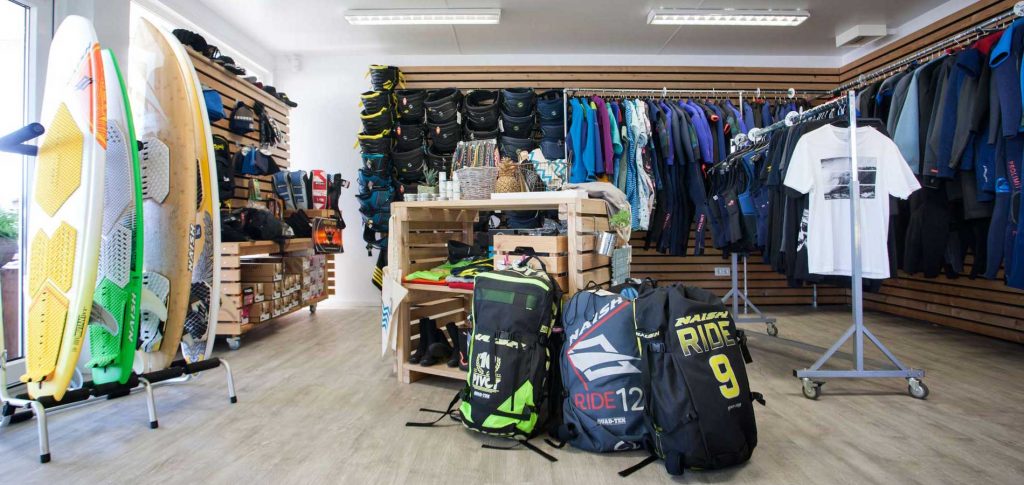
Yes! All courses include all the necessary equipment. For one-on-one private lessons, you can also use your own gear (kites, bars, and board); in that case, you’ll receive a 10% discount on the course price. Unfortunately, for hygiene reasons, we cannot rent out neoprene gloves , shoes, or hoods! These items are often necessary during the early and late seasons (March–May and October–November). We recommend purchasing them at our on-site shop. In any case, this is part of the gear you’ll need at Lake Neusiedl and most other kitesurfing spots in Europe anyway. 

What does "wind guarantee" mean, and can courses that have already been paid for expire?

Of course, we can’t guarantee you wind. However, you’ll definitely have the best chance of good wind in Austria here with us on the plains by Lake Neusiedl. Our wind guarantee states that paid courses that cannot be held due to suboptimal wind and weather conditions will be credited to your account. This credit is issued through our booking system. Your courses will be made available for rescheduling, and you can return at a later date. This means your booked courses are digitally recorded and have no expiration date. If your course was booked several years ago, so-called value adjustments may apply due to price increases that have occurred in the meantime. We recommend that you complete your course as soon as possible. This way, the knowledge and motor skills you’ve learned will stay with you long-term, rather than if you let them slip and have to start over from scratch year after year.

The kitesurfing school is located at the Podersdorf beach. Is the admission ticket included in the course price?

To get to the kitesurfing school, you'll need to go to the beach area. We are the leaseholders there, so we can’t include the beach admission fee in the course price. However, if you plan to stay overnight in Podersdorf, be sure to check in at your accommodation before the course starts and ask for the Neusiedler See Card. With this card, you’ll get free beach access throughout Podersdorf for the duration of your stay. 

Is parking at the Nord Nord parking lot in front of the kite school free?

Yes, parking is free. However, from 8:00 p.m. to 6:00 a.m., this parking lot is designated as an “unattended parking area” for cars where people can sleep. After that time, parking costs EUR 18 per night! Whether or not you plan to sleep in your car, if your car is parked in the lot after 8:00 PM without a paid ticket, you may receive a parking ticket. If you plan to stay at the beach a little longer after your session (past 8:00 PM), we recommend simply parking outside the lot, for example, on the grassy area across the street.

What are Lycras, and what do I need them for?

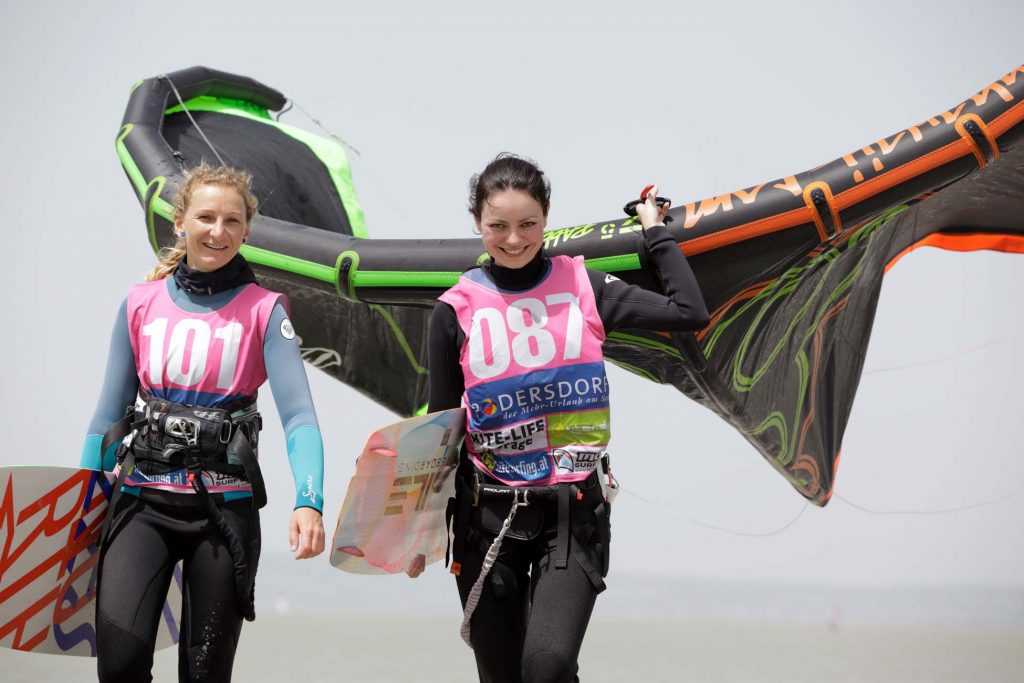
Lycra is really just an elastic synthetic material. Generally speaking, the Lycra shirts provided by the beach management are also known as wetshirts. This is a unique tradition found only here at Lake Neusiedl. Every kiter—male or female—must register their name at the beach ticket office. You’ll receive a Lycra shirt with a number on it. It’s basically like your license plate on a car. You must always wear this Lycra shirt while kitesurfing between May and the end of September! A violation of this rule can result in a ban from the beach. During a course, we’ll provide you with the Lycra shirt free of charge. Once you’re kitesurfing on your own (without an instructor), you must wear your own Lycra shirt. Cost of the Lycra shirt: EUR 15. For more information, contact the Podersdorf Tourism Office. 

How long will it take me to learn kitesurfing?

Unfortunately, there’s no clear-cut answer here! As a rule, you’ll learn the basics of kitesurfing within the first 2 days, and after 3 or 5 days on the water, you’ll probably already be covering your first few meters! Talent, skill, interest in the sport, prior experience (wakeboarding, paragliding, etc.), and current wind conditions all play a role in how quickly you learn to kitesurf. And don’t forget: When in doubt, it’s always the kite, the wind, or the instructor’s fault. 😉 Even if it takes a little longer… with a little patience, everyone has managed to learn it!

What is kitesurfing?

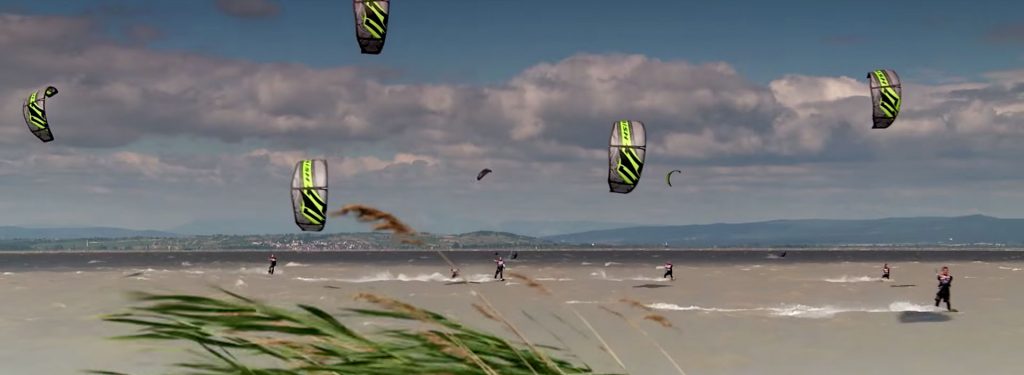
Kitesurfing essentially combines two sports: steering and controlling a kite, and gliding across the water on a board. The kite measures between 3 and 18 square meters, is attached to lines up to 30 meters long, and pulls the rider across the water. The kite is controlled using a bar. When steered correctly, a kite can be used to perform jumps up to 10 meters high and up to 100 meters long, even without waves. Kitesurfing can be done in much lighter winds than windsurfing, which is one of the reasons for its incredible boom.

Is there a kitesurfing license?

Yes, they do. There are several organizations around the world that offer kitesurfing certifications. In Austria and Germany, you can obtain a VDWS or VÖWS license (both are internationally recognized) from licensed kitesurfing schools—essentially a “kitesurfing license.” This license isn’t mandatory (yet), but it serves as proof that you’ve completed a kitesurfing course. Even if you want to rent equipment while on vacation, you’ll need a kitesurfing license.

Is kitesurfing dangerous?

Kitesurfing is about as dangerous as driving a car. In other words, with proper training and a responsible attitude, the risk can be greatly reduced. At the beginning, attending a good kitesurfing school is essential. That’s the only place where you can safely and quickly learn how to handle the kite properly and assess situations correctly.

What are the requirements?

Apart from knowing how to swim, you basically don't need any special skills to get started with kitesurfing. While physical and mental fitness are an advantage, even complete beginners can get their first taste of kitesurfing within 2–3 days. 

Why aren't kitesurfing lessons cheap?

A kitesurfing course certainly costs more than some other sports courses elsewhere. Quality and safety are our top priorities, which is why we deliberately do not offer low-budget courses with large groups and subpar quality. To ensure you have the best possible learning experience, we spare no expense. We always use the latest equipment, have a state-of-the-art facility and motorboats, constantly invest in the continuing education of our instructors, and offer you a wind and satisfaction guarantee… in other words, we spare no expense to provide you with the best possible quality on the market.

How can I learn to kitesurf?

It’s best to sign up for a beginner’s course, where you’ll be introduced to the sport step by step. First, you’ll learn how to steer a stunt kite. Once you’ve mastered the kite’s power, you’ll move on to body drags in the water—you lie on your stomach in the water while the kite pulls you. This helps you quickly learn how to control the kite and how to launch it from the water. After that, it’s time to get on the board. You’ll make your first attempts at water starts and maybe even cover your first few meters on the board right away.

      The most popular beginner's course we offer is theXLarge Beginner's Course

      Wind Guarantee: What if there's no wind during the kitesurfing course?

      This is handled differently at every kitesurfing school (depending on the location). At kitesurfing.at, you have what’s called a “wind guarantee”: You can use your remaining practical sessions at any time when the wind conditions are right. You’ll receive a voucher that’s valid for an extended period. However, we never send anyone home prematurely—there’s always something worthwhile to learn.

      Where can I learn to kitesurf?

      The best spots are those with a large area where you can stand. You’ll learn much faster and more safely there than in a spot where you have to swim. Waves, currents, and reefs make learning even more difficult. The most important thing, however, is to attend a licensed kitesurfing school. Only there will you receive instruction from instructors with the right expertise and be able to safely discover the joy of kitesurfing. You’ll also make progress faster if you’re in good hands. If you want to keep practicing on your own after the course, contact your kitesurfing school and ask how best to go about it. They might have someone who’d like to practice with you (on their own).

      Where did kitesurfing come from?

      For many years now, people have been letting kites pull them—first with buggies or skis, and in recent years, on the water as well. The reason for the delay was that kites had to be invented that could take off again from the water. The Legagnoix brothers were pioneers, and when surfing legend Robby Naish adopted this system, the breakthrough was achieved. Today, the systems available on the market are more sophisticated and safer, making this sport accessible to a wide range of people.

      How much does it cost to buy your own kiteboarding gear?

      Of course, as with anything, there’s no upper limit to the costs. For a good “starter kit” with everything you need, you should expect to pay around €1,300. You can find cheaper options, but the question is how old the gear is and what condition it’s in! When buying gear, remember: don’t make rash decisions, and if you have any questions, you’re in good hands at your trusted kite school! Don’t be afraid to ask, because a cheap bargain can end up being expensive—and dangerous, to boot.

      Satisfaction Guarantee: What if something goes wrong?

      If, for any reason, you are not satisfied with your kitesurfing course, you can retake it for free.

      Course Duration

      Kitesurfing is an outdoor sport that is influenced by many variables, such as wind and weather. The course durations we list are estimates and may vary in either direction.
      If there are fewer than two participants, the courses will be shortened and conducted as private lessons.

      Water level

      The water level at Lake Neusiedl is currently quite low. While this is obviously a problem for sports like sailing, it’s actually an advantage for kitesurfing. You can stand up anywhere without any trouble, so you’re guaranteed to make rapid progress.